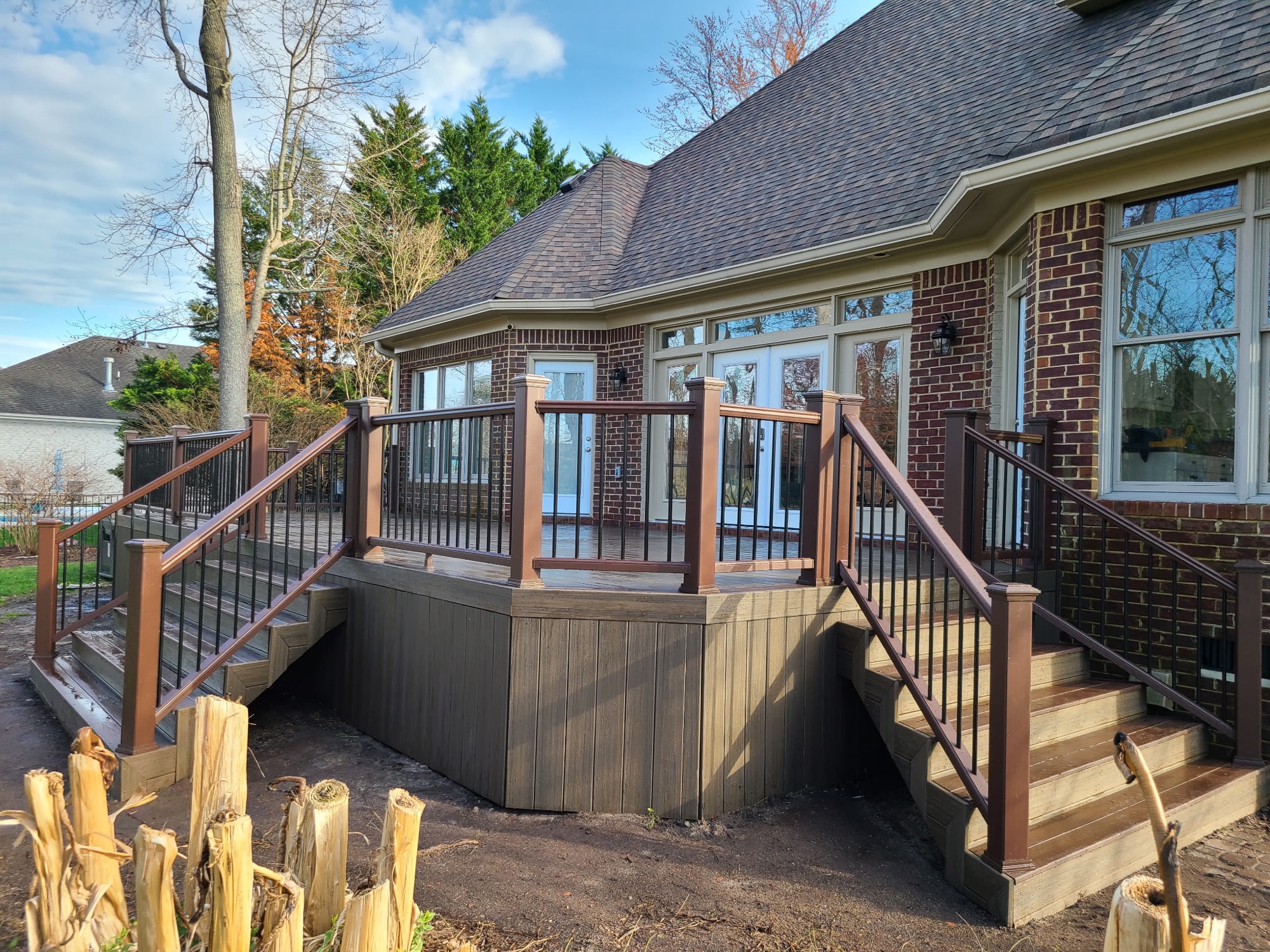
Almost every estimate we give ends up at the same question: should we build it in composite or wood? Robert hears it at kitchen tables from Great Bridge to Smithfield, and the right answer really does change from one yard to the next. A shady deck by the water and a sunny deck on a new-construction lot in Suffolk are two different problems.
Here’s how we walk homeowners through the choice after 24 years of building decks across Hampton Roads.
Composite vs. wood deck cost
When you compare composite decking vs. pressure-treated wood decking, wood costs less for the same size deck. If you want the most square footage for your money, wood usually wins.
Composite costs more on day one, but the price range inside composite is wide. Trex and TimberTech each make lines from entry level to premium. When someone wants composite without paying top dollar, we usually point them to Deckorators. It’s the best bang for your buck of the three brands we install and still a quality board.
We don’t make you guess. Every written estimate we give lists composite and wood side by side, so you can see the real difference for your deck.
What our weather does to a wood deck
Hampton Roads is hard on wood. Humidity keeps boards damp, salt air works on fasteners, and August sun bakes the surface. A wood deck that’s left alone will turn gray, check and start to splinter within a few seasons.
None of that means wood is a bad choice. It means wood needs a routine: clean and seal it every one to two years. Homeowners who keep up with that get many good years out of a treated deck. Our wood decks page covers how we build them to hold up here.
What composite asks of you instead
Composite boards blend wood fiber and plastic under a protective cap. They don’t soak up water, they don’t splinter, and they never need stain. A wash with soap and a soft brush a couple of times a year is usually all they need.
The major brands back their boards with limited warranties of 25 years or more. The trade-offs are the higher price and heat, which brings us to the next point.
When homeowners ask us for the best composite decking, they’re usually asking which board to buy. Composite deck building materials come in a few types: capped composite boards like Trex and TimberTech’s EDGE and PRO lines, mineral-based composite like Deckorators, and all-PVC boards like TimberTech AZEK with no wood fiber at all. Each one sits at a different price point, so the “best” board really depends on your budget, your sun exposure and how close you are to the water. Our composite decking page walks through all three brands we install.
Heat, color and sun
Dark composite colors get hot in full summer sun. If your deck faces south or west and gets no shade, we’ll usually steer you toward a lighter shade. We bring samples to your house so you can see the colors next to your siding, in your own light, before you decide.
The part nobody sees: the frame
Here’s something a lot of people don’t realize. A composite deck still sits on a pressure-treated wood frame, and the frame is where most decks fail. Pretty boards on a weak frame won’t last.
So no matter which boards you pick, we build the frame the same way:
- Ground-contact rated lumber for posts, beams and joists
- A sealing agent painted over the top of the framing to keep water out of the wood
- Freestanding construction on its own posts and footings, so nothing bolts into your house or traps water against your siding
- Hardware rated to stand up to salt air
So which one should you build?
- Go with wood if you want the lowest upfront cost and the look of real wood, and you don’t mind sealing every year or two.
- Go with composite if you’d rather spend weekends on the deck than working on it.
- Go with Deckorators if you want composite at the friendliest price.
- Look at PVC (like TimberTech AZEK) if your deck sits right on the water or close to the ground.
Questions we hear a lot
Can I put composite boards on my old wood deck?
Sometimes. If the frame is solid and the joists are spaced right for composite, we can strip the old boards and put new ones on. That’s our deck refurbishing service. We inspect the frame first and tell you straight if it’s not worth saving.
Is PVC the same thing as composite?
Not quite. Composite has wood fiber inside a protective cap. PVC boards have no wood at all, which is why they handle constant moisture so well.
Which lasts longer?
Composite boards will outlast wood boards with far less work. How long the whole deck lasts comes down to the frame, which is why we build it the same careful way for both.
See both prices for your deck
The easiest way to decide is to see real numbers. As deck builders serving Virginia Beach, Chesapeake, Norfolk, Suffolk and Smithfield, we’ll come out, measure and send a written estimate with composite and wood side by side. Browse our composite decking and wood decks pages, look through the gallery, or request your free estimate. You can also call Mid Atlantic Exteriors at (757) 334-0125.
